Geography and Natural Assets: What the Land Actually Offers
For commercial developers, geography is not scenery it is a cost and viability framework. The slope gradient determines earthworks expense. The soil type determines foundation requirements. The water sources determine operational self-sufficiency. The ecological profile determines AMDAL complexity. This page addresses all four.
Topographic Profile
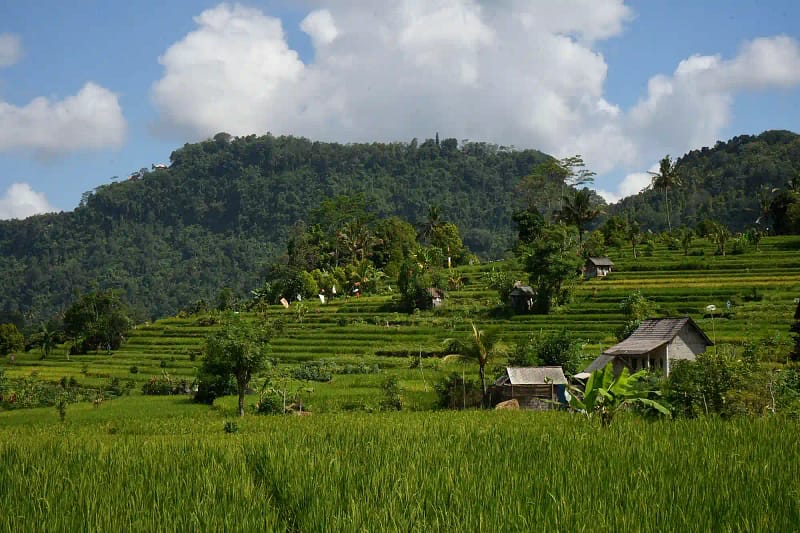
The Sidemen Serenity Estate parcels span a north-south corridor across the western escarpment of the Sidemen valley, from the valley floor at approximately 300 metres above sea level to the upper ridgeline parcels at 680 metres. The topographic survey, conducted in 2024 and available to registered Developer Portal members, confirms the following profile across the four development stages:
| Stage | Elevation Range | Dominant Gradient | Terrain Character |
|---|---|---|---|
| Stage 1 (23,495 m²) | 320 to 400m ASL | 8 to 14% | Gently sloping terraced valley floor sealed road frontage |
| Stage 2 (30,245 m²) | 420 to 550m ASL | 15 to 35% (plateau zones 6 to 10%) | Mid-slope terraced two buildable plateau areas totalling 1.8 ha |
| Stage 3 (24,328 m²) | 400 to 520m ASL | 12 to 28% | North-facing terraced zone retirement village precinct |
| Stage 4 (51,899 m²) | 480 to 680m ASL | 25 to 45% (ridge crests <15%) | Upper ridgeline future development land bank |
Soil Composition and Construction Implications
Andosols Upper Slopes
- Characteristic of active volcanic catchments derived from Gunung Agung ashfall and basaltic weathering
- Organic matter content: 8 to 15 per cent in upper horizons excellent agricultural productivity
- Good bearing capacity once upper organic horizon is managed through standard compaction and engineered fill protocols
Inceptisols Mid-Slope and Lower Terraced Zones
- Geotechnical bore logs from three Stage 2 test sites confirm competent bearing strata at 1.5 to 2.8 metres below natural ground level
- Allowable bearing pressures: 80 to 120 kN/m² consistent with 2 to 3-storey resort structures without deep pile foundations
- No evidence of contamination across any parcel two-generation agricultural land use history only
Water Resources and Hydrology
Natural Spring Sources
| Spring | Location | Dry-Season Flow Rate | Commercial Significance |
|---|---|---|---|
| Spring 1 | Parcel A Stage 1 boundary | 0.8 L/s | Primary drinking water source for resort core |
| Spring 2 | Parcel A Stage 1 boundary | 1.2 L/s | Secondary supply and irrigation |
| Spring 3 | Parcel D Stage 4 buffer zone | 2.1 L/s | Largest source retirement village supply |
| Combined dry-season flow | Total across all sources | 4.1 L/s (354 m³/day) | 2x the operating requirement of a 40-key resort |
Wastewater and Drainage
- Package WWTP sized to 120 per cent of peak daily flow planned treated effluent directed to agricultural irrigation
- Seasonal creek in Stage 2 has a 10-metre statutory setback corridor retained as vegetated amenity buffer in development concept
- Lower Stage 1 sections require engineered drainage for any hard-surfaced areas to manage wet-season sheet flow
Vegetation and Ecological Profile
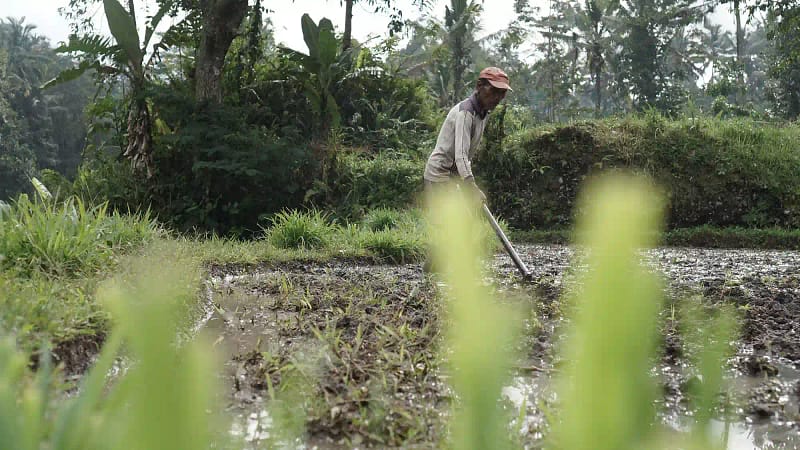
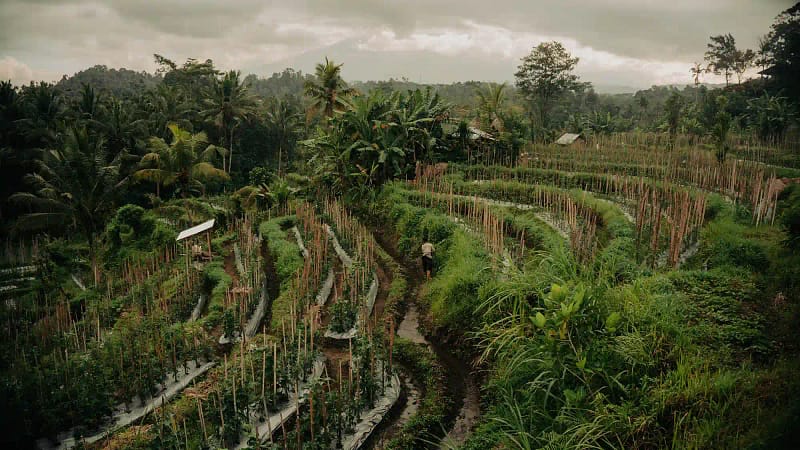
- Active wet rice terraces (Subak system): mid and lower sections of Stages 1 and 2
- Mature bamboo forest: northern flank of Stage 2 Dendrocalamus asper (giant bamboo) commercially harvestable for construction material
- Secondary forest with Javanese tree fern, Macaranga, and Ficus species: upper slopes and Stage 4 buffer zone
- Stage 4 conservation zone: confirmed foraging habitat for Javan hawk-eagle (Nisaetus bartelsi IUCN Vulnerable). A 50-metre exclusion buffer is incorporated in the development concept without impact on buildable footprint
- No CITES Appendix I or II flora species identified within the cultivated or plateau development zones
Seasonal Climate Profile
| Parameter | Dry Season (Jun–Sep) | Wet Season (Nov–Mar) | Shoulder (Apr–May, Oct) |
|---|---|---|---|
| Mean daytime maximum | 24.8°C | 27.4°C | 26.1 to 26.8°C |
| Mean overnight minimum | 17.2°C | 20.6°C | Transitional |
| Relative humidity | 62 to 74% | 78 to 88% | Reducing |
| Average monthly rainfall | 28 to 65mm | 180 to 420mm | Variable |
| Wind | NE trades 8 to 14 km/h | SW monsoon 12 to 22 km/h | Variable |
| Cloud cover (average) | Low to moderate | High | Moderate |
Data source: Badan Meteorologi, Klimatologi, dan Geofisika (BMKG), Rendang Station, Karangasem (elevation 650m ASL, approximately 9 kilometres north of primary development parcels). Dataset: 2020 to 2024 five-year average.
Why the Dry Season Is the Defining Commercial Window
The June to September dry season at Sidemen’s development zone elevations produces a climate profile unlike anything available at coastal Bali sites or even Ubud. Overnight temperatures of 17 degrees Celsius allow guests to sleep without air conditioning. Daytime temperatures rarely exceed 26 degrees. Humidity is low by Southeast Asian standards. The sky is clear most days.
This aligns directly with the three most commercially significant travel periods for the target source markets:
- Australian school holidays: July and September
- European summer holidays: July and August
- Japanese Golden Week: late April to early May shoulder period, still comfortable at Sidemen elevations
- Singapore and Hong Kong holiday periods: June and December supported by the mild shoulder-season conditions Sidemen offers when coastal Bali is its hottest
The Resort Architecture Opportunity
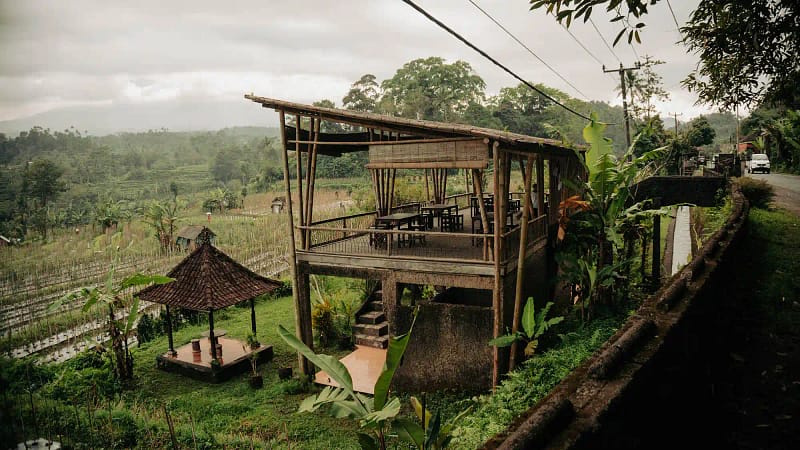
The temperature range at Sidemen’s elevation supports a genuinely open-air architectural approach. Unlike coastal Bali resorts, which require climate control systems to be commercially viable during the wet season and overnight, Sidemen villas can be designed without air conditioning as a primary comfort system using natural cross-ventilation, ceiling fans, and careful orientation instead.
- Cost implication: Eliminating centralised air conditioning from 40 villa pavilions reduces both capital cost and ongoing electricity operating costs substantially
- Marketing implication: The open-air, nature-immersive experience that premium eco-luxury brands command a premium for is genuinely achievable at Sidemen not a design compromise
- Sustainability implication: Lower energy demand supports the solar PV self-sufficiency model and strengthens ESG narrative for sustainability-aligned investors
The Retirement Village Climate Case
The 17 to 25 degree daily temperature range at the Sidemen development zone is one of the most frequently cited quality-of-life preferences for active retirees from Australia, Japan, Singapore, and northern Europe when evaluating long-stay tropical destinations. Survey data from comparable retirement lifestyle community markets in Southeast Asia consistently places ‘cooler year-round climate’ in the top three relocation criteria alongside healthcare access and cost of living.
Sidemen offers this in a tropical highland setting that feels nothing like the humid lowland cities most retirees are choosing to leave. That is a genuinely differentiated position in the Bali retirement market.
Solar Resource Data
| Metric | Value | Commercial Application |
|---|---|---|
| Global Horizontal Irradiance (GHI) | 4.8 to 5.3 peak sun hours/day | 150 to 250 kWp PV system offsetting 25 to 40% of resort electricity |
| Best solar months | July, August, September | Coincides with peak occupancy maximum on-site generation when demand is highest |
| PV system capital cost (installed, 2026) | AUD 148,000 to AUD 265,000 | 7 to 9-year simple payback at current PLN commercial tariff |
Data source: NASA POWER dataset for Sidemen valley coordinates.
Access the Full Topographic Survey
The complete topographic data, site plans, bore logs, and hydrological assessment are available to registered Developer Portal members.